01

Texas Historical Archives
Preserving the tangible and intangible heritage of Texas through a curated collection of primary sources, oral histories, and archival documents. Resources provide a comprehensive lens into Texas complex past, ensuring that the stories of our community remain accessible for future generations.
Historical Resources
Quick Lesson
on Texas
When people say 'Don't Mess with Texas,' it is more than a catchy phrase—it is an educational testament to a protective love for the land and its people. It reflects a profound, collective warning that Texans will always stand to defend their state’s integrity and shared values. To understand the heart of a Texan is to recognize a people who derive their identity from a history of overcoming impossible odds, fighting countless wars ensuring that their singular spirit remains untouched and respected by the world. Texas is more than a state; it is a global icon of independence and variety. Its massive size covers everything from the sandy Gulf Coast and rolling Hill Country to the high peaks of the West. This landscape built a legendary ranching and cowboy tradition that still defines our grit today. Beyond the wide-open spaces, Texas drives the world's energy industry and is home to thriving major cities like Houston, Dallas, and Austin. These hubs are world-famous for their innovation and cultural reach. Our music—be it country, blues, or rock—and our unique flavors, like slow-smoked barbecue and Tex-Mex, are celebrated across the globe. We hold onto a special pride because we were once our own nation, a history that fuels our bold spirit. This blend of frontier heritage, hard work, and deep hospitality makes us truly stand out. Whether it is through the strength of our oil fields or the soul of our People and Culture, Texas remains an inspiring leader with a personality that simply cannot be matched anywhere else on Earth.


History of Texas
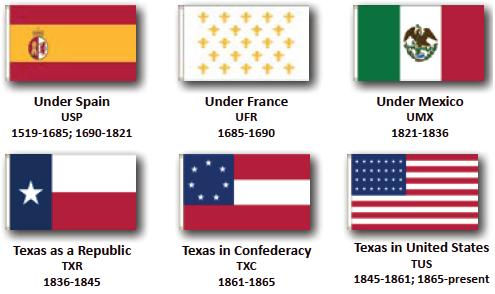
The history of Texas is shaped by conflict, migration, and competing claims to land and power. For centuries, Native nations such as the Caddo, Comanche, Apache, and Karankawa lived across the region, trading, farming, hunting, and fighting over territory and resources. In the 1500s, Spain claimed Texas as part of its northern frontier, building missions and presidios to spread Catholicism and secure its empire. Later, France briefly challenged Spanish control along the Gulf Coast, and after Mexico won independence from Spain in 1821, Texas became part of the new Mexican nation. Each of these powers saw Texas as a strategic borderland—valuable for its land, rivers, and position between empires. In the 1820s and 1830s, Anglo-American settlers and Tejanos (Mexican Texans) clashed with the Mexican government over issues like immigration, slavery, local autonomy, and centralized rule. These tensions led to the Texas Revolution (1835–1836), a war fought over who would control Texas and under what laws. After winning independence, the Republic of Texas existed as its own nation, but border disputes with Mexico and debates over slavery and expansion in the United States set the stage for more conflict. When Texas joined the United States in 1845, the U.S.–Mexican War followed, reshaping the map of North America. Later, Texas seceded from the Union and fought on the Confederate side in the American Civil War, with battles and occupation leaving deep political and social scars.
The Alamo, a former Spanish mission in San Antonio, became one of the most famous sites in Texas history during the Texas Revolution. In early 1836, a small group of Texan defenders, including figures like Davy Crockett, James “Jim” Bowie, and William B. Travis, held the Alamo against a much larger Mexican army led by General Antonio López de Santa Anna. For 13 days, the defenders endured bombardment and repeated demands to surrender, choosing instead to stand their ground. On March 6, 1836, the Alamo fell and nearly all the defenders were killed. News of their sacrifice spread across Texas, inspiring cries of “Remember the Alamo!” and fueling support for the revolutionary cause. At the Battle of San Jacinto weeks later, General Sam Houston led Texan forces to a decisive victory over Santa Anna, securing Texas independence and turning the Alamo into a lasting symbol of courage, resistance, and the high cost of freedom.


The Alamo

The Lone Star Flag
The Texas flag, known as the Lone Star Flag, is one of the most recognizable symbols in American history. Adopted as the national flag of the Republic of Texas in 1839, it features a single white star on a blue vertical stripe, with horizontal stripes of white and red. Each part carries meaning: blue for loyalty, white for purity, red for bravery, and the lone star for unity as one independent state. The flag grew out of a time when Texans were fighting to define their own government, laws, and identity, separate from Mexico and distinct within the United States. The Lone Star Flag was closely tied to the struggles and wars that shaped Texas. During the Texas Revolution and the years that followed, Texans fought over issues like self-rule, land rights, and the protection of their communities and way of life. The flag came to stand for the sacrifices made at places like the Alamo, Goliad, and San Jacinto, and later for Texans who served in conflicts from the Civil War to modern wars overseas. For many, the flag represents the idea that freedom must be defended, and that Texans are willing to stand firm, even when outnumbered or under great pressure. To Texans, the flag is more than a piece of cloth—it is a living symbol of pride, resilience, and shared story. It flies over schools, courthouses, ranches, churches, and stadiums, reminding people of their roots and responsibilities. Many Texans feel a deep emotional connection to the Lone Star, seeing in it their family histories, their faith, and their belief in independence and hard work. Honoring the Texas flag is a way of honoring the generations who built and defended the state, and of passing on a sense of identity and duty to the next generation.

Texas Global
Influence
Texas holds a unique place in the world because it blends the history of a former independent republic with a powerful modern identity. No other state combines such a strong sense of independence, regional culture, and global recognition. From its vast ranchlands and oil fields to its borderlands, cities, and coastal plains, Texas feels like its own country in size, diversity, and spirit. The stories of Native nations, Spanish and Mexican rule, the Texas Revolution, and later statehood all layer together to create a culture that is instantly recognizable—rooted in courage, hospitality, and a fierce love of home.The Texas flag, the Lone Star flag, is a big part of what makes Texas stand out from every other place on earth. Its simple design—a single white star with bold red, white, and blue—makes it easy to recognize at a glance, even from far away. Around the world, people who may not know every U.S. state can still often identify the Texas flag and connect it with cowboys, the Alamo, oil, music, and a larger-than-life attitude. In many ways, it functions almost like a national flag, symbolizing a place that once was its own country and still carries that independent spirit.Because of this, the Texas flag is often seen as the most recognizable U.S. state flag on the planet. It appears in movies, music, sports, and global media, and Texans proudly display it on clothing, art, businesses, and homes. For Texans, seeing the Lone Star abroad can feel like spotting a piece of home in a foreign land. The flag tells the world that Texas is different—not just another state, but a place with its own story, values, and pride that reach far beyond its borders.

